
Introduction: The Moment Everything Became Clear
In October 2023, students at Columbia University—one of America’s most prestigious Ivy League institutions—gathered on campus to chant “We are Hamas! We are Hamas!”
Let that sink in.
Not “We support Palestinian rights.” Not “We oppose Israeli policy.”
We are Hamas.
The same Hamas that just massacred 1,200 civilians, raped women, beheaded babies, and kidnapped grandmothers. These students—the future doctors, lawyers, journalists, and policymakers of America—proudly identified themselves with a designated terrorist organization.
And the shocking part? This didn’t happen by accident.

Photo: https://www.al-monitor.com/
Columbia’s administration didn’t condemn it forcefully. The professors didn’t rush to correct this moral catastrophe. The media coverage was muted, uncomfortable, and brief.
Because at Columbia University, this kind of radicalization isn’t a bug—it’s a feature.

What we witnessed wasn’t the spontaneous outburst of misguided youth. It was the inevitable result of a 100-year project to transform America’s elite universities into factories of anti-Western ideology. And Columbia? Columbia is where it all began.
Part 1: Follow the Money – The Qatar Connection
Before we dive into the intellectual architecture, let’s talk about something concrete: money.
Between 2001 and 2021, Qatar poured over $4.7 billion into American universities. That’s not a typo. Billion. With a B.

Columbia University received a significant share of those funds—funding Middle Eastern studies programs, endowing professorships, sponsoring conferences, and shaping curriculum.
Why would Qatar—a nation that harbors Hamas leadership, funds the Muslim Brotherhood, and operates Al Jazeera’s propaganda machine—invest billions in American education?
Because it works.
The return on investment is staggering: a generation of American students who view:
- Israel as illegitimate
- Western civilization is inherently oppressive
- Terrorism as “resistance.”
- America is the villain in every global conflict
You’re paying $90,000 in tuition per year. Qatar is paying to ensure your child learns to despise everything you believe in, justifying violence, terror, narcissistic tactics like blame shifting and gaslighting.
And Columbia? Columbia is the crown jewel of this operation.
Part 2: The Intellectual Pipeline – Three Men Who Changed Everything
Ideology requires intellectual architects. At Columbia, three professors built the framework that transformed American academia into an anti-Western ecosystem:
Edward Said: The Foundation (1963-2003)
In 1978, Columbia professor Edward Said published “Orientalism”—a book that would reshape how an entire generation views the West.
Said’s thesis was elegantly simple and devastatingly effective: Everything the West says about the East is a lie designed to justify domination.
Western scholarship? Racist.
Western democracy? Colonial cover.
Western values? Tools of oppression.
Said didn’t just critique Western policy—he delegitimized Western civilization itself.
His framework became the lens through which every humanities and social science department would view history, culture, and politics. From Columbia, Said’s ideas spread like wildfire through every major university in America and Europe.
The Unfalsifiable Trap: How Said Weaponized Guilt
The beauty of Said’s framework—from the anti-Western perspective—is its unfalsifiability: any criticism of his theory only proves the theory. Disagree with Said? You’re displaying “Orientalist” thinking. Question his premise? That’s your colonial mindset speaking. The circle is closed, the trap is set, and Western intellectuals walked right into it.
But Said’s real genius wasn’t just in constructing an intellectually airtight theory. It was in weaponizing guilt. By claiming that power dynamics inherently corrupted Western understanding of non-Western cultures, Said didn’t just critique scholarship—he delegitimized the very possibility of Western judgment about other cultures. Every Western perception, every observation, every conclusion became suspect. Not because it was necessarily wrong, but because the observer was Western.
This was revolutionary. Said effectively told the West: “You cannot trust your own eyes, your own experiences, your own rational analysis—because your history of power poisons your very perspective.” He planted a seed of radical self-doubt that would grow into the catastrophic failures we witness today.
From Orientalism to White Fragility: The Guilt Industry
The direct line from Said to Robin DiAngelo’s “White Fragility” is unmistakable. DiAngelo applied Said’s framework to race relations within Western societies. Where Said said Western scholars couldn’t objectively understand “the Orient,” DiAngelo declared white people couldn’t understand their own racism. Where Said criticized his theory, evidence of Orientalist thinking, DiAngelo made any white person’s denial of racism proof of their racism: the same unfalsifiable trap, the same weaponized guilt, the same intellectual tyranny.
But here’s what both Said and his successors fundamentally misunderstood—or deliberately obscured: Cultural differences are fundamental. Value systems differ. Not all belief systems produce equivalent outcomes.
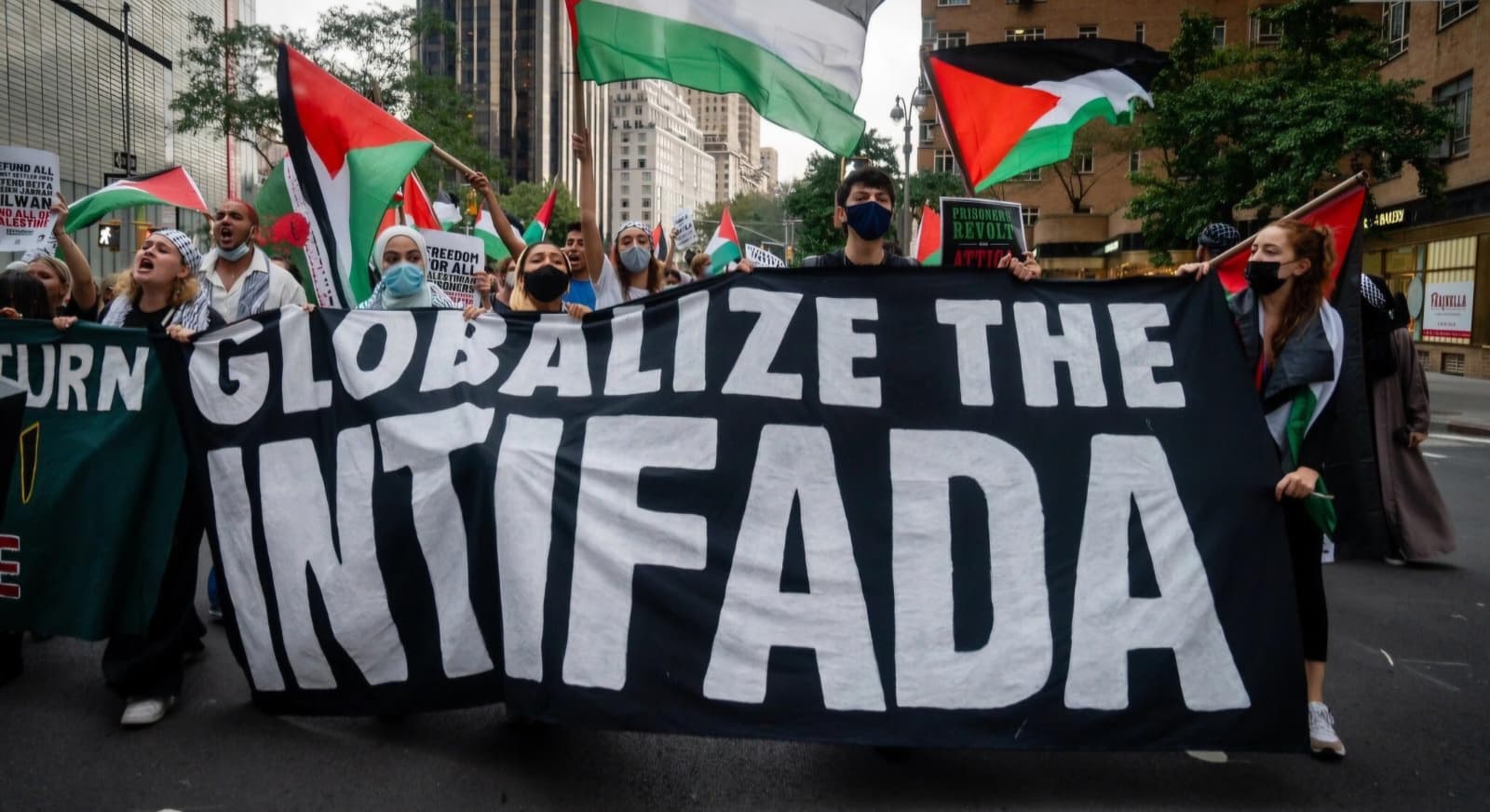
Watch this video showing a cultural clush cetweetn muslims and Christians in dearcborn michigan, muslims ban the lqbtq flags and seg their call to prayer at 5 am every day, also using retoric tha t calling for a globelized infidata, taking over the West and diminishing Western civilization –
The West’s fatal error was accepting Said’s premise that our negative observations about other cultures were merely “projections”—imagined characteristics we invented to justify our dominance. This was never true. When nineteenth-century British observers noted different attitudes toward women’s rights in Islamic societies, they weren’t “projecting.” They were observing. When they identified different concepts of individual liberty, other approaches to religious tolerance, different attitudes toward innovation and scientific inquiry—these weren’t fantasies conjured from a colonial imagination. There were fundamental differences rooted in genuinely different value systems, religious frameworks, and civilizational priorities.
The problem wasn’t that these observations were wrong. The problem was that Said convinced the West they had no right to make them.
The Catastrophic Consequences
This is where Said’s intellectual poison produces its most devastating effects. By framing everything through the lens of Western power and “brown bodies,” Said and his disciples taught the West to see criticism of non-Western cultures as inherently racist. They collapsed a crucial distinction: the difference between immutable characteristics like race and chosen belief systems like religion and ideology.
Skin color tells you nothing about a person’s values. Religion and ideology tell you everything.
A brown-skinned atheist from Pakistan who believes in individual liberty, women’s equality, and secular governance shares Western values. A brown-skinned Islamist who believes in sharia law, gender segregation, and religious supremacy does not. The difference isn’t racial—it’s ideological. It’s not about “brown bodies”—it’s about belief systems and the values they produce.
But Said’s framework makes this obvious truth impossible to articulate. To say that specific interpretations of Islam produce cultures less compatible with liberal democracy is to commit the unforgivable sin of “Orientalism.” To observe that mass immigration from societies with fundamentally different value systems might create integration challenges is to reveal your “colonial mindset.” To suggest that not all cultures are equally conducive to human flourishing is to mark yourself as a bigot.
The result? The West has rendered itself incapable of honest analysis about the most critical questions facing it.
The Price of Blindness: From Theory to Terror
We are now living with the consequences of this intellectual paralysis. The smoking ruins aren’t theoretical—they’re literal.
The grooming gang scandals in Rotherham, Rochdale, and dozens of other British cities, where authorities allowed the systematic rape of thousands of white working-class girls, rather than be accused of racism. Swedish authorities are watching their country transform into the rape capital of Europe while remaining more concerned about “Islamophobia” than about victims.
The Cologne New Year’s Eve mass sexual assaults in 2016, initially covered up by German authorities, worried about “stirring up hatred.” The murder of Theo van Gogh, the Charlie Hebdo massacre, the Bataclan, Manchester, Nice, London Bridge, Westminster—each attack followed by Western leaders insisting the violence has “nothing to do with Islam.”
The pattern in Australia, across Europe, throughout the West is identical: authorities who can identify the problem but cannot name it. Citizens who can see what’s happening but have been trained to doubt their own observations. Societies that have accepted Said’s poisonous premise—that their negative judgments about other cultures are merely projections of their own guilt.
The path forward requires rejecting Said’s fundamental premise. The West must reclaim its right—indeed, its responsibility—to make judgments about values, beliefs, and cultures. Not based on race or ethnicity or “brown bodies,” but based on ideas and their consequences.
Rashid Khalidi: The Torch-Bearer (1963-Present)
When Said died in 2003, his protégé Rashid Khalidi was ready to continue the mission.
Khalidi didn’t just study under Said—he inherited him. Columbia created the Edward Said Chair of Modern Arab Studies and appointed Khalidi to fill it. The message was clear: this isn’t just one professor’s view. This is institutional orthodoxy.
Khalidi’s contribution was to take Said’s theoretical framework and apply it specifically to the Israeli-Palestinian conflict, transforming it into an unquestionable academic “truth”:
- Israel is a “settler-colonial” state (therefore illegitimate by definition)
- Palestinians are indigenous victims (therefore, any resistance is justified)
- American support for Israel is imperialism (therefore, America is complicit in oppression)
Under Khalidi’s influence, Columbia’s Middle East Institute became the intellectual hub of anti-Israel activism in American academia. His students went on to teach at Harvard, Yale, Berkeley, and dozens of other institutions—spreading the gospel.
His close ties to Barack Obama (they served together on boards in Chicago) ensured these ideas reached the highest levels of American government.

In 1998, Barack Obama sat with Edward Said, Rashid Khalidi, and Ali Abunimah at a Palestinian-related event in Chicago. Photo – some amazing facts
Joseph Massad: The Radicalizer (1999-Present)
If Said built the foundation and Khalidi constructed the walls, Joseph Massad added the explosives. Massad, a professor of Modern Arab Politics at Columbia, took the framework even further:
His 2006 book “Desiring Arabs” used queer theory to argue that Israel’s tolerance of LGBTQ rights is actually a form of colonialism—”pinkwashing” to cover up oppression. (Yes, really. Supporting gay rights became evidence of imperialism.)
His 2015 essay “Blind Faith” went further, arguing that opposing antisemitism itself is a Western colonialist project designed to protect Israel.
After October 7, Massad published an article titled “The Gaza Ghetto Uprising”—comparing Hamas’s massacre of civilians to the Warsaw Ghetto uprising. He called it a “stunning victory” and “awesome operation.”
This wasn’t published in some fringe blog. This was a Columbia professor, writing in an academic platform, celebrating the murder of 1,200 people.
Columbia’s response? Massad continues to teach. His classes fill up. His students absorb these ideas. Some of them end up chanting “We are Hamas.”

photo: https://mesaas.columbia.edu/faculty-directory/joseph-massad/
From Lecture Hall to Street Chants: The Academic-to-Activist Pipeline
The journey from Said’s unfalsifiable Orientalism to masked students screaming “Intifada! Intifada!” outside university libraries is neither accidental nor organic. It is the predictable result of a carefully constructed academic apparatus that has spent decades transforming American universities into ideological factories—factories that manufacture activists who cannot define the slogans they chant but are confident of their righteousness.

Understanding how this happens requires seeing the whole picture: how Said’s theoretical framework delegitimized Western judgment, how Khalidi romanticized Palestinian nationalism while erasing its violent realities, and how Massad constructed an elaborate persecution narrative that made every Israeli action proof of genocidal intent. These three theoretical pillars don’t just exist in academic journals read by a handful of scholars. They filter down, get simplified, get emotionalized, and emerge on the quad as students who have paid $80,000 a year to learn that Israel is a “settler-colonial apartheid state” and that “resistance” (a word carefully chosen to obscure “terrorism”) is not just justified but heroic.
The Transmission Mechanism: How Theory Becomes Rage
Here’s how the pipeline works in practice:
A freshman arrives at Columbia (or Yale, or Berkeley, or dozens of other institutions) and enrolls in a Middle East Studies course. The professor—often trained in the Said-Khalidi tradition—doesn’t present competing narratives about the Israeli-Palestinian conflict. They show a single narrative, dressed in the language of “anti-colonialism” and “social justice.” Israeli security measures become “apartheid walls.” Palestinian terrorism becomes “resistance to occupation.” Jewish history in the land becomes “Zionist mythology.” The 1948 Israeli independence became “the Nakba”—the catastrophe.

The student learns Massad’s framework: that Zionism is a form of supremacist ideology, that Israel’s very existence is a colonial crime, that Palestinian violence is the inevitable response to intolerable oppression. They learn Khalidi’s version of history, where Palestinians are perpetual victims with no agency, no choices, no responsibility for the consequences of their decisions—only an endless cycle of Israeli aggression requiring endless “resistance.”
And underpinning it all is Said’s intellectual trap: any attempt to question this narrative, any suggestion that Palestinian culture or leadership might bear some responsibility for Palestinian suffering, any observation that other refugees from the 1940s managed to build new lives rather than maintaining multigenerational refugee camps—all of this becomes evidence of the student’s “Orientalist” thinking, their internalized colonialism, their complicity in oppression.
The Emotional Weaponization: From Analysis to Activism
But the genius of this system isn’t just intellectual—it’s emotional. These professors don’t just teach a different interpretation of history. They teach moral certainty. They teach that there is an apparent victim (Palestinians) and a clear oppressor (Israel), and that any complexity, any nuance, any “both-sides-ism” is a moral failure, a form of complicity in oppression.
Students emerge from these courses not with knowledge but with conviction. They haven’t learned to think critically about the Middle East—they’ve learned to feel righteous about condemning Israel. They can’t explain what “from the river to the sea” means geographically (spoiler: it means eliminating Israel), but they know it’s a cry for “liberation.” They can’t define “intifada” historically (spoiler: it means waves of suicide bombings, stabbings, and shootings that killed over 1,000 Israelis), but they know it represents “resistance.”
This is the dark achievement of the Said-Khalidi-Massad framework: it has created thousands of students who are morally sure about a conflict they don’t actually understand. Students who can recite “apartheid” and “genocide” and “settler-colonialism” but who cannot tell you basic facts about the history they’re so passionate about. Who doesn’t know that Jews are indigenous to the land, that the Palestinian leadership rejected every peace offer, that Gaza has been Judenrein since 2005, that the “occupation” they protest is the result of Arab wars of annihilation against Israel?
The Qatar Connection: Who’s Really Getting Educated?
And here’s the final, sickest irony: these students are paying astronomical sums to receive this indoctrination, while their universities are being paid by the very forces that want to see Western liberal values destroyed. Qatar alone has poured billions into American universities—the same Qatar that hosts Hamas leadership, funds Al Jazeera’s propaganda, and promotes the Muslim Brotherhood’s agenda of Islamist expansion. (For a deeper exploration of how foreign influence operations work to destabilize Western institutions, see The Enemy Within: How the West Is Destroying Itself.)

The students think they’re learning critical thinking. They believe they are standing up for the oppressed. They think they are on the right side of history. They don’t realize they’re just unpaid interns in Qatar’s information warfare campaign against the West. They don’t understand that the “anti-colonial” framework they’ve absorbed is itself a colonial project—an attempt by Islamist forces to colonize Western minds with ideas that will ultimately destroy the very freedoms these students take for granted.
They scream “Intifada!” without knowing they’re calling for the murder of Jews. They chant “From the river to the sea!” without realizing they’re calling for the elimination of the only democracy in the Middle East. They wave Palestinian flags without understanding that they’re supporting a movement whose founding charter calls for the destruction of Israel and the killing of Jews worldwide. They do all this with the absolute moral certainty that comes from being told, by tenured professors at elite institutions, that they are freedom fighters.
The Manufactured Mythology: Deconstructing the Palestinian Narrative
What these students never learn is how the Palestinian national identity itself was constructed, weaponized, and deployed as a tool of war against Israel. They don’t realize that Palestinian nationalism as we know it today is essentially a post-1967 invention, that the PLO was founded in 1964 (before the “occupation” they claim to resist), that “Palestine” as a distinct Arab national identity barely existed before it became useful as a weapon against Jewish sovereignty. They don’t learn how the Arab world has cynically maintained Palestinian refugees in camps for 75 years as a permanent grievance, how neighboring Arab states have denied Palestinians citizenship to keep them as perpetual victims, how the Palestinian leadership has rejected every peace offer because accepting a state would mean accepting Israel’s right to exist.
This manufactured mythology—this carefully constructed victimhood narrative—is what Said’s intellectual framework made possible, what Khalidi’s historical revisionism reinforced, and what Massad’s persecution complex crystallized into unfalsifiable dogma. (For a comprehensive deconstruction of how this narrative was built and why it persists despite its contradictions, see The Palestinian Myth
The Cost of Certainty
The real tragedy isn’t just that these students are wrong—though they are, catastrophically wrong. The real tragedy is that they’ve been robbed of the ability to think. They’ve been given conclusions instead of tools, slogans instead of knowledge, moral certainty instead of intellectual humility. They’ve been trained to see complexity as complicity, nuance as oppression, and any defense of Israel as proof of racism.
And they’ve paid a fortune for the privilege of this intellectual lobotomy. They’ve gone into debt to be transformed from thinking individuals into ideological automatons, from students into activists, from people who ask questions into people who scream slogans.
This is what the Said-Khalidi-Massad academic apparatus has achieved: a generation that knows everything except what actually happened, that cares deeply about justice except when it requires them to question their own certainties, that fights passionately for “liberation” while championing movements that would destroy the very freedoms that allow them to protest in the first place.
The question isn’t whether these students will eventually realize they’ve been used. The question is whether they’ll know it before they’ve helped destroy the civilization that gave them the luxury of their ignorant righteousness.


Leave a Reply to From College Brainwashing to City Hall: How Anti-American Activists Are Running Your Town – Save The WestCancel reply